Lab-Grown Meat: A Straight-Talk Guide to What It Is, Who's Selling It, and What It Actually Means - Part 2
Written by Arbitrage • 2026-08-21 00:00:00
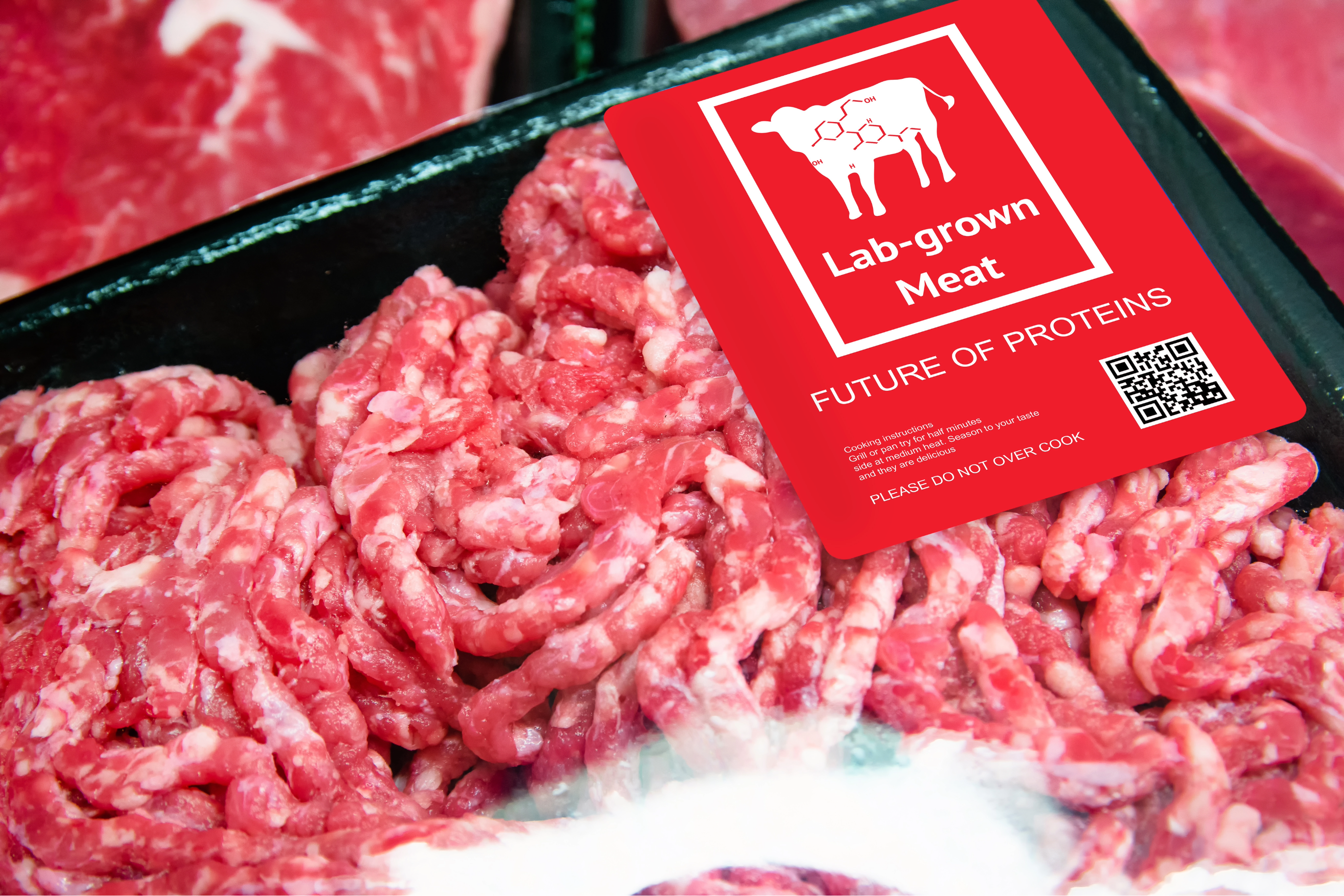
If you have not read yesterday's blog post yet, please do so before continuing here.
Animals
Pros:
- No feedlots, no slaughterhouses, no live transport
- Starts from a small cell sample rather than a raised animal
Cons (and these are real):
- Fetal bovine serum. The standard growth supplement is derived from blood collected by cardiac puncture from bovine fetuses. The research literature calls dependence on it one of the sector's greatest challenges, and animal-free media a central goal. Serum-free formulations are advancing fast, but "slaughter-free" is a claim to verify product by product, not a category guarantee.
- What happens to the herds? Nobody has credibly modeled it, because cultivated meat is effectively 0% of the market. Historically, U.S. cattle numbers follow a roughly 10-year expansion-and-contraction cycle driven by producer profitability - not by alternative proteins. If cultivated meat ever scaled, fewer animals bred means fewer animals living. That's a genuinely open ethical question, not a settled win for either side.
- Ranching jobs. The cattle industry supports well over a million U.S. jobs. This is the concern driving most state bans.
Your grocery bill
Beef is already becoming a luxury, and the causes are well documented.
- Beef cattle inventory sits at a 75-year low, driven by drought, high interest rates, and rising production costs
- Cattle inventory is down roughly 8.6% from 2020 - about 8.2 million animals
- Numbers are expected to stay down until at least 2028
- USDA's Economic Research Service projects record cattle prices in 2026 and elevated retail beef prices for years
Demand is the bigger force. Kansas State agricultural economist Glynn Tonsor notes that consumer demand has driven prices higher than supply constraints have. Self-reported vegan and vegetarian rates fell from 14% in 2020 to 7% in 2025. Americans want more meat, and there are fewer cattle.
Now here's the part worth watching. Cultivated meat currently costs far more to produce than conventional meat which is why you can't buy it right now. But driving that cost down is the entire investor thesis. UPSIDE Foods has raised over $600 million on the premise that bioreactors will eventually undercut raising animals. Believer Meats built a 200,000-square-foot plant sized for roughly 12,000 tons a year. Nobody spends that to sell a permanent boutique product.
The people funding it have been candid about the destination. For example, Bill Gates (the largest private owner of American farmland, with roughly 242,000 acres across some 17 states) has backed UPSIDE Foods, Beyond Meat, and Impossible Foods. In a 2021 MIT Technology Review interview, he said all rich countries should move to 100% synthetic beef, adding that once the price premium shrinks enough, you can change people's behavior "or use regulation to totally shift the demand." Read that last part twice. The stated approach isn't purely to build a better product and win on merit. It explicitly includes regulation as a tool to move demand.
So watch the two curves. Conventional beef gets structurally more expensive due to shrinking herd, decade-long cattle cycle, land and feed and labor costs moving one direction. Cultivated protein aims to get cheaper as capacity scales. And consider who sits on each side: roughly 700,000 ranches supporting well over a million jobs, down from about 1.3 million ranches in 1962, versus a handful of venture-backed firms running proprietary processes with undisclosed inputs.
The honest read is that beef prices are climbing for reasons that have nothing to do with bioreactors. Drought and the cattle cycle were running long before anyone grew a meatball in a tank. But the same period that’s making real meat expensive is the one in which enormous capital is betting on a replacement, while at least one of its most prominent backers has floated using regulation to shift demand. Those are separate forces. They also happen to point the same direction.
The legal map
| Status | States |
| full ban | Alabama, Florida, Mississippi, Montana, Nebraska |
| temporary ban | Indiana (to June 30, 2027), Texas (to September 1, 2027) |
| labeling restrictions | Arkansas, North Dakota, Colorado, Ohio, Iowa, and others |
In March 2026, the 11th Circuit upheld Florida's ban, ruling that federal poultry law doesn't preempt it. Legal analysts read the decision as narrowing preemption challenges broadly. Federal inspection doesn't obligate states to allow every approved product onto their shelves.
Supporters frame the bans as protecting ranchers. Critics note that the National Cattlemen's Beef Association hasn't voiced concern about competition, and argue the laws kill an industry before it can compete. Both sides have active litigation.
The Bottom Line
- It is real meat, grown from cells instead of animals
- It is approved but essentially unavailable - cost and capacity, not science, are the barrier
- The environmental case is unproven, hinging entirely on growth media and energy sourcing
- The animal-welfare case is strong but not absolute - check for animal-free media claims
- Your beef prices are rising for unrelated reasons - but watch where the two cost curves are headed
- Read the label - "cell-cultivated" or "cell-cultured" must appear in the product name
Our bodies spent a very long time learning to run on what grows in soil, grazes on grass, and swims in open water. Not on what comes out of a stainless-steel tank. We are, in the most literal sense, what we eat. When it comes to food, what comes from nature is always better than what comes from a lab.
That doesn't make cultivated meat "dangerous." It may well prove "safe," and most of the people building it are earnest about solving real problems. But "safe" and "good for you" have never been the same standard. A product that needs a marketing department to explain why it isn't what it sounds like is a product worth asking harder questions about.
So here's the one worth sitting with: if a food has to be renamed before people will eat it, what is the new name protecting - us, or the product?