Force Majeure: The Hidden Volatility Trigger in Metals Markets, Part 1
Written by Arbitrage • 2026-01-07 00:00:00
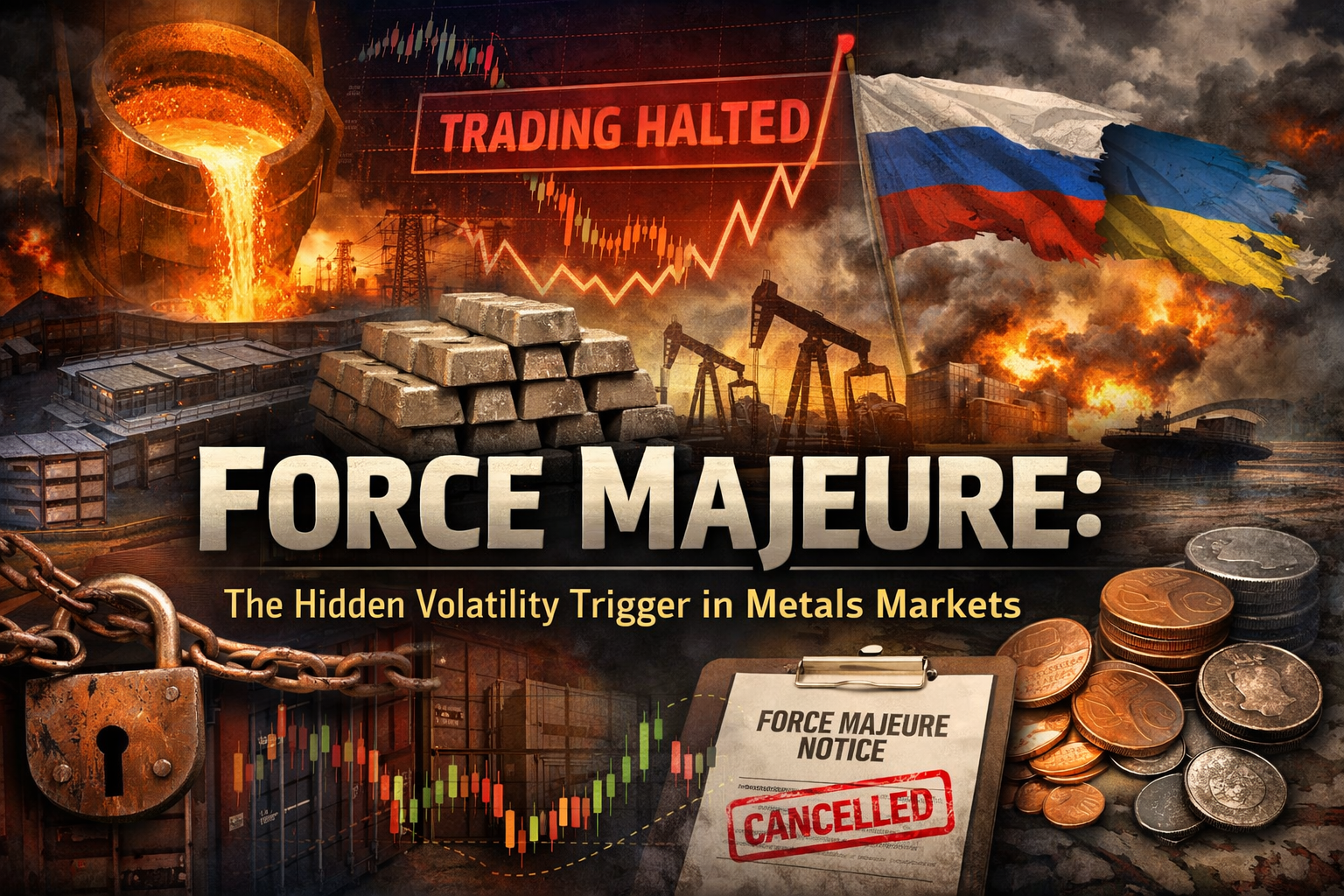
Markets love certainty. Metals contracts promise it. But every so often, reality intervenes - and when it does, traders are reminded that commodities are not just lines on a screen; they are physical assets moving through fragile global systems. That's where force majeure enters the picture.
What force majeure actually means
Force majeure is a legal clause embedded in most physical commodity contracts. In plain English, it says that if something extraordinary and uncontrollable happens, the obligation to deliver can be suspended or canceled. In metals markets, those "extraordinary" events are not rare edge cases. They are recurring features of the system: wars and sanctions, energy shortages, labor strikes, export bans, smelter shutdowns, port congestion, and government intervention.
When force majeure is triggered, the contract doesn't fail because of price. It fails because delivery becomes uncertain. And uncertainty is what markets price most violently.
Why metals are different from most futures markets
Many futures markets are effectively financial abstractions. Metals are not. A metals contract implies a real producer, a real warehouse, a real delivery window, and a real buyer who needs the metal. Unlike cash-settled contracts, metals futures sit on top of physical infrastructure that can and does break. That creates a unique risk profile because you are not just betting on price. You are betting on logistics, energy, politics, and compliance. Force majeure is the clause that acknowledges this reality.
Historical case study: the 2022 nickel crisis
In March 2022, the global nickel market experienced one of the most extreme dislocations in modern commodity history. Nickel prices surged over 250 percent in less than two days, driven by sanctions on Russian supply, tight physical inventories, large concentrated short positions held by producers, and panic buying as delivery risk became unclear.
As prices accelerated, something critical happened: the market stopped functioning as a delivery mechanism. Producers faced margin calls that threatened insolvency. Physical nickel still existed - but moving, pricing, and settling it became chaotic. At that point, the issue was no longer speculation. It was systemic risk. The London Metal Exchange halted trading, canceled completed trades, and rewrote market outcomes retroactively.
Whether those decisions were "right" or "wrong" misses the bigger lesson. The nickel crisis revealed that futures prices can detach completely from physical reality, delivery obligations can become impossible to honor at speed, and exchange intervention becomes unavoidable when force majeure conditions emerge implicitly, even if not formally declared. The contract didn't break because nickel disappeared; it broke because confidence in settlement collapsed.
Come back tomorrow for Part 2 of this topic!