Why the Moon Matters Again
Written by Arbitrage • 2026-04-01 00:00:00
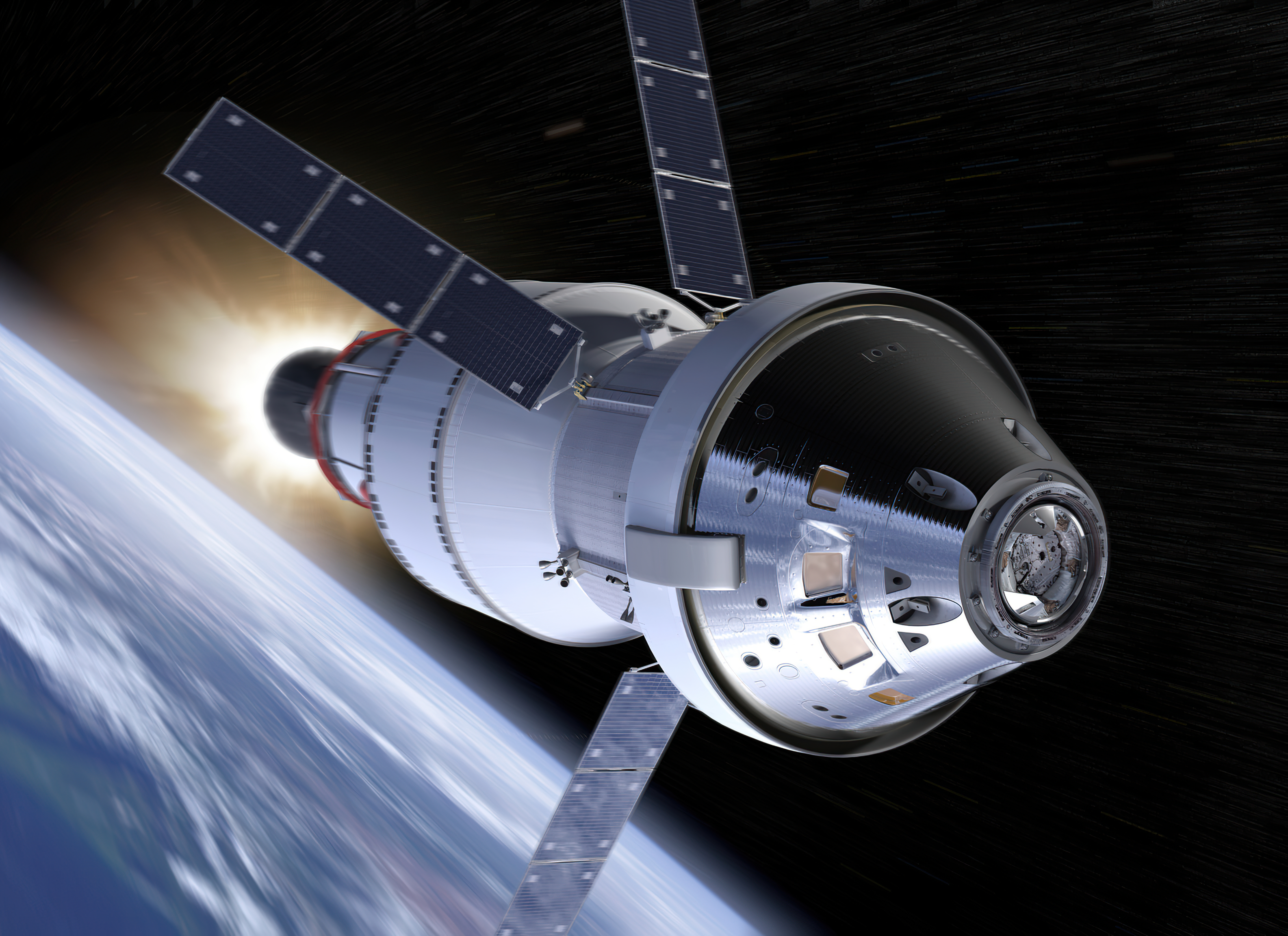
NASA's return to the Moon is about more than revisiting past achievements. Through its Artemis program, NASA is pursuing a sustained lunar presence that reframes the Moon as a proving ground rather than merely a final destination. This reflects a broader recognition that deep-space exploration, technological leadership, and geopolitical influence are increasingly intertwined - and that the Moon is central to all three. The upcoming Artemis II launch, scheduled for today, Wednesday, April 1, marks the first time astronauts will travel toward the Moon in more than 50 years.
At the scientific level, the Moon remains an underexplored archive of the early solar system. Unlike Earth, it lacks weather, plate tectonics, and erosion - thus preserving a record of impacts and materials dating back more than four billion years. Understanding the Moon's geology and composition helps scientists answer fundamental questions about how Earth formed, how planets evolve, and how life-supporting environments emerge. While Artemis II itself will not land on the lunar surface, it plays a crucial role in enabling future missions. By sending four astronauts on a 10-day journey around the Moon, NASA will test the systems needed to safely transport humans into deep space and back. This includes life-support systems, navigation, communication, and the spacecraft's ability to withstand the extreme conditions of space travel.
The mission profile highlights just how significant Artemis II is. After launching from Kennedy Space Center in Florida, the crew will enter a high Earth orbit before performing a translunar injection that sends them toward the Moon. They will travel around the far side of the Moon on a "free-return" trajectory, meaning gravity will naturally guide them back to Earth without requiring additional propulsion. This approach is both a safety measure and a demonstration of precise mission planning, ensuring that future missions can rely on proven orbital mechanics.
Artemis II is also a major step forward in human spaceflight capability. Apollo demonstrated that humans could reach the Moon; Artemis is designed to show they can live and work there sustainably. This will be the first crewed flight of both the Orion spacecraft and the Space Launch System, serving as a full-scale validation of NASA's next-generation deep space architecture. The crew (Reid Wiseman, Victor Glover, Christina Koch, and Jeremy Hansen) represents a diverse and international team, underscoring the collaborative nature of modern space exploration. Notably, the mission includes milestones such as the first woman and the first person of color traveling beyond low Earth orbit, signaling a broader and more inclusive future for space exploration.
This launch also demonstrates how space exploration has evolved economically. NASA's modern approach is a much broader ecosystem than before, relying heavily on commercial and international partnerships, drawing in private companies to develop landers, launch systems, and lunar infrastructure. This collaborative model spreads cost, accelerates innovation, and positions the Moon as a hub for future economic activity. Historically, investments in space exploration have driven breakthroughs in materials science, computing, communications, and medical technology. Artemis is expected to continue that pattern, catalyzing innovation while supporting high-skill jobs across engineering, manufacturing, and research sectors.
There is also a strategic geopolitical component to this mission. As other nations accelerate their own lunar ambitions, the Moon is reemerging as a domain of global competition and cooperation. By leading a coalition of international partners and setting norms for responsible exploration, NASA plays a central role in shaping how space is governed. Establishing a continuous human presence on the Moon reinforces U.S. leadership while promoting collaboration rather than conflict in cislunar space.
Space exploration has long served as a unifying endeavor, inspiring generations to pursue science, technology, engineering, and mathematics. For decades, human missions beyond Earth orbit remained a historical memory tied to the Apollo era. With this launch today, that changes. The sight of astronauts traveling around the Moon once again serves as a powerful reminder that space exploration is not a closed chapter, but an ongoing endeavor. Artemis II is a transition point, bridging the gap between testing and sustained exploration, between past achievements and future possibilities. Because the Moon offers science, resources, experience, and inspiration in one place, this mission will build the foundation for the next century of exploration. By proving that humans can safely venture back to the Moon, NASA is not just revisiting history; it is actively building the foundation for humanity's next era in space.