Lawful vs. Chaotic, Good vs. Evil: A Simple Grid with Big Ideas
Written by Arbitrage • 2026-05-08 00:00:00
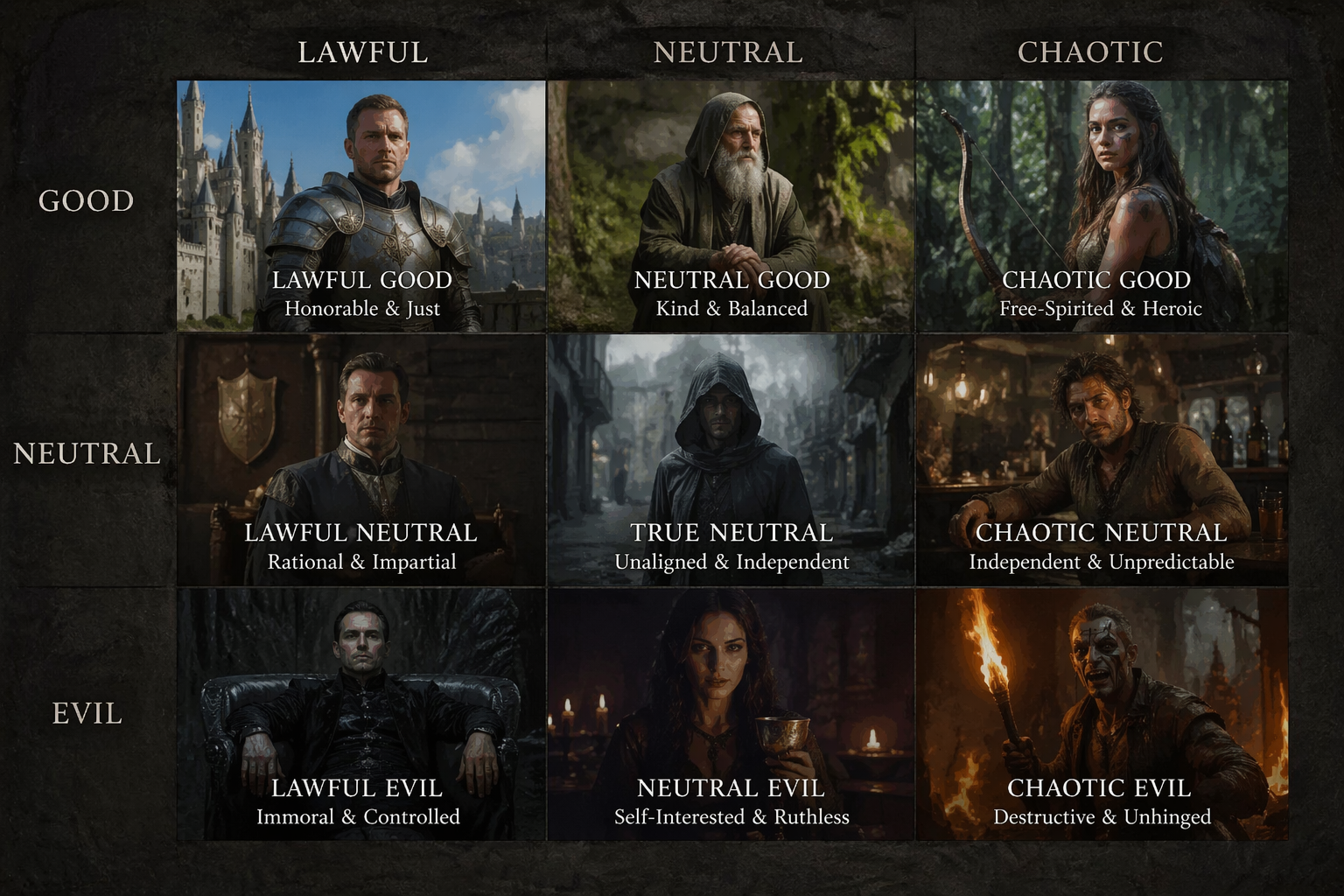
The idea of "lawful vs. chaotic" and "good vs. evil" comes from a simple but powerful way of understanding morality. Instead of treating people as just good or bad, it introduces two separate axes: one about how we relate to rules and order, and another about how we treat others. When you combine them, you get a grid that feels surprisingly accurate, not just for fictional characters, but for real people and everyday decisions.
Lawful vs. Chaotic: Structure or Freedom
The lawful-chaotic axis is really about how much you trust systems versus your own judgment. People who lean lawful tend to believe that rules, traditions, and institutions exist for a reason. They may not always like those rules, but they see value in consistency and order. Following structure, to them, is what keeps things fair and predictable. On the other hand, chaotic-minded people are more skeptical of imposed systems. They value personal freedom and flexibility, and they are more likely to question whether rules deserve to be followed at all. If a system feels unjust or limiting, they won't hesitate to ignore or challenge it. Neither approach is inherently right or wrong - too much order can feel suffocating, while too much chaos can lead to instability.
Good vs. Evil: Compassion or Self-Interest
The good-evil axis deals with motivation and empathy. "Good" is usually associated with caring about others, acting with compassion, and sometimes sacrificing personal gain for the well-being of others. It's about looking beyond yourself and considering the impact of your actions. "Evil," in contrast, leans toward self-interest. That doesn't always mean cartoonish villainy. It can be subtle, like putting your own needs above others without regard for harm caused. At its extreme, it includes manipulation, exploitation, or cruelty. Still, even this axis isn't perfectly clean. People can act generously in one situation and selfishly in another, which makes the distinction more fluid than it first appears.
How the Grid Comes Together
When you combine these two axes, you get a range of personality types that feel instantly recognizable. A lawful good person might be someone who follows rules because they believe it helps protect others. A chaotic good person might break those same rules to achieve a just outcome. Both are trying to do good; they just disagree on how.
Similarly, a lawful evil character might use systems and rules to control or exploit others, while a chaotic evil one rejects both order and morality altogether. In between, there are more balanced or ambiguous types, like someone who values order above all else regardless of moral outcome, or someone who simply prioritizes their own interests without strong feelings about rules.
Why This Framework Works
One reason this system resonates so much is that it reflects real disagreements people have. Many conflicts - whether in politics, workplaces, or personal relationships - aren't about goals, but about methods. People may agree on what "good" looks like, but clash over whether to follow established rules or challenge them. It also makes characters and people feel more complex. Instead of labeling someone as purely good or bad, the grid allows for nuance. A person can be principled but rigid, free-spirited but unreliable, kind but flawed, or selfish but disciplined. These combinations feel more human because they mirror real contradictions.
The Limits of the Grid
Of course, no simple framework can fully capture human behavior. People don't fit neatly into boxes, and they often shift depending on context. Someone might act "lawful" at work but "chaotic" in their personal life or make both altruistic and selfish choices depending on the situation. The value of the grid isn't in being perfectly accurate, but rather it's in giving us a language to think about these differences. It helps us notice patterns, ask better questions, and understand why people approach the world in such different ways.
Final Thoughts
At its core, the lawful vs. chaotic and good vs. evil framework is less about labeling people and more about exploring tension. It highlights the push and pull between order and freedom, between caring for others and looking out for yourself. Those tensions don't just exist in stories; they show up in everyday life, shaping the choices we make and the way we see the world.