Two Economies, One Country
Written by Arbitrage • 2026-07-13 00:00:00
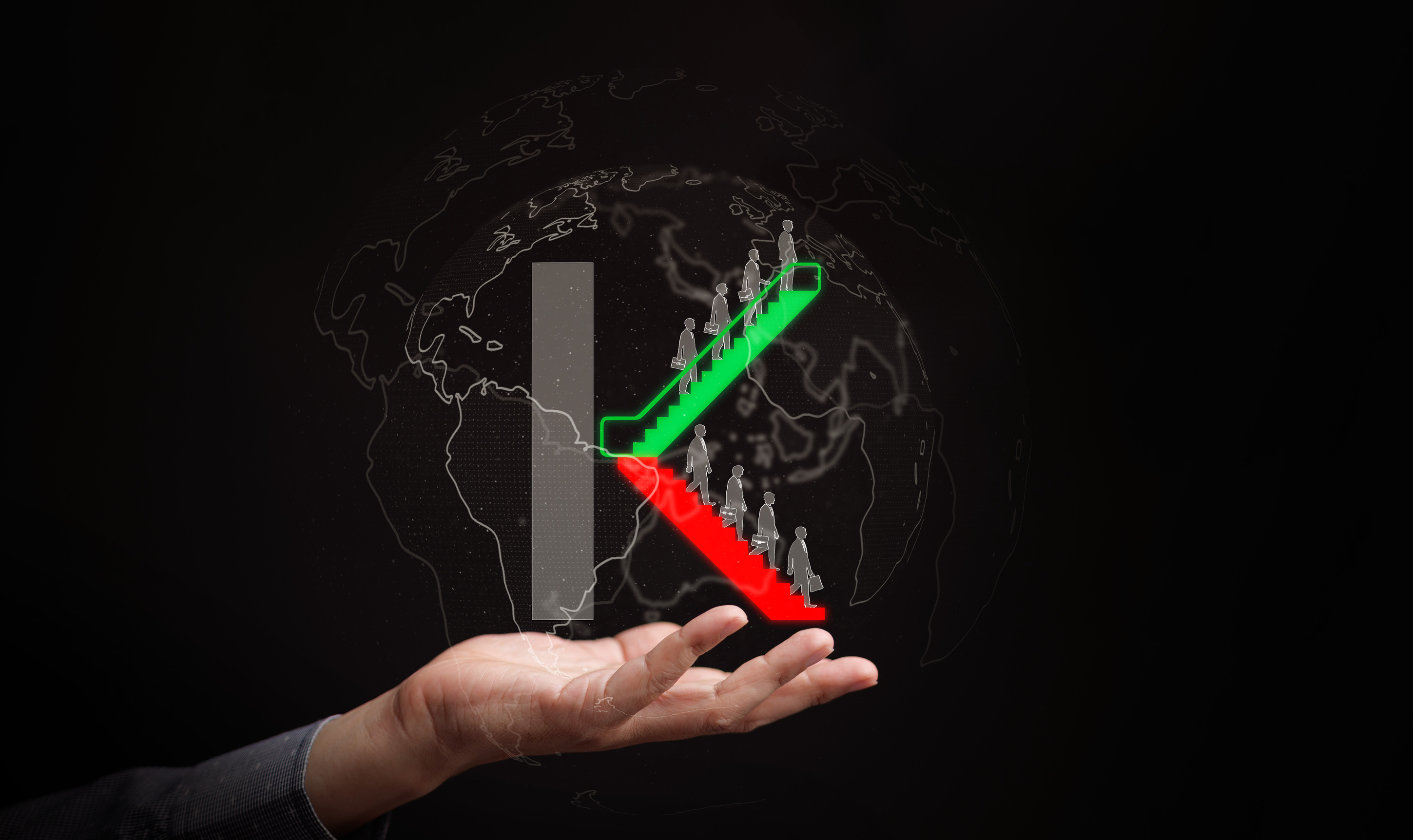
The U.S. economy may look healthy when viewed from 30,000 feet, but the experience on the ground is anything but uniform. Economists increasingly describe today's environment as a K-shaped economy, where one segment of society continues to climb while another struggles to keep up. The term gained widespread attention during the COVID-19 recovery, but many experts argue it has become a defining characteristic of the modern American economy. Unlike a V-shaped recovery (where everyone rebounds together) or a U-shaped recovery (where growth returns after a prolonged downturn), a K-shaped economy sends different groups in opposite directions. Economist Dr. Mohamed El-Erian has frequently noted that economic averages can mask substantial differences beneath the surface, arguing that many households experience a very different economy than headline statistics suggest. Higher-income households continue moving upward, while lower-income workers, renters, and budget-conscious consumers often face stagnant purchasing power and rising financial pressure.
Several factors have contributed to this divide. Inflation has raised the cost of all essentials, including housing, groceries, insurance, and utilities, while higher interest rates have made borrowing more expensive. Households with significant investments have benefited from rising stock markets and home values, creating even greater wealth disparities. According to the Federal Reserve's Survey of Consumer Finances (SCF), the wealthiest 10% of Americans own roughly two-thirds of the nation's wealth, allowing them to weather inflation and higher prices far more comfortably than families living paycheck to paycheck.
The effects of the K-shaped economy are easy to spot in retail businesses and consumer spending. Grocery shoppers increasingly split their purchases between discount retailers and premium specialty stores, while many middle-market brands face softer demand. Fast food restaurants have responded by expanding value meals as consumers become more price-sensitive, even as upscale dining continues to attract affluent customers willing to spend freely. The divide extends into everyday expenses as well. Consumers with higher incomes often continue purchasing meal delivery services, luxury fitness memberships, and subscription products, while others are cutting back on dining out, switching to store brands, postponing medical care, and relying on buy-now-pay-later financing to stretch their budgets.
Airlines provide another clear example as premium cabins and luxury travel have remained remarkably resilient with travelers continuing to pay for business class, airport lounges, and premium experiences. Meanwhile, many leisure travelers hunt aggressively for basic economy fares, delay vacations, or reduce discretionary travel altogether. The automotive market also reflects this pattern, with strong demand for luxury vehicles alongside growing interest in affordable used cars.
Housing offers perhaps the clearest illustration of the split. Homeowners who locked in historically low mortgage rates during 2020 and 2021 have largely been insulated from rising interest rates, while first-time homebuyers face significantly higher monthly payments than just a few years ago. Renters have also felt the squeeze. Although rent inflation has cooled in some metropolitan areas, many households continue to spend well above the commonly recommended 30% of income on housing.
Businesses have adapted by serving increasingly different customer segments. Discount chains, warehouse clubs, and off-price retailers continue attracting shoppers searching for value, while luxury brands and high-end experiences report continued healthy demand from wealthier consumers. Many economists point to these contrasting trends as evidence that broad averaged economic indicators, such as GDP growth or unemployment, no longer tell the whole story. Today's economy increasingly reflects two very different financial realities. Recognizing this divide helps clarify why one household may feel financially stable while another family, in the same city and under the same economic headlines, feels squeezed by rising costs and limited opportunities.