The Mustache That Started a Conversation: Why Men's Health Needs More Attention
Written by Arbitrage • 2026-11-11 00:00:00
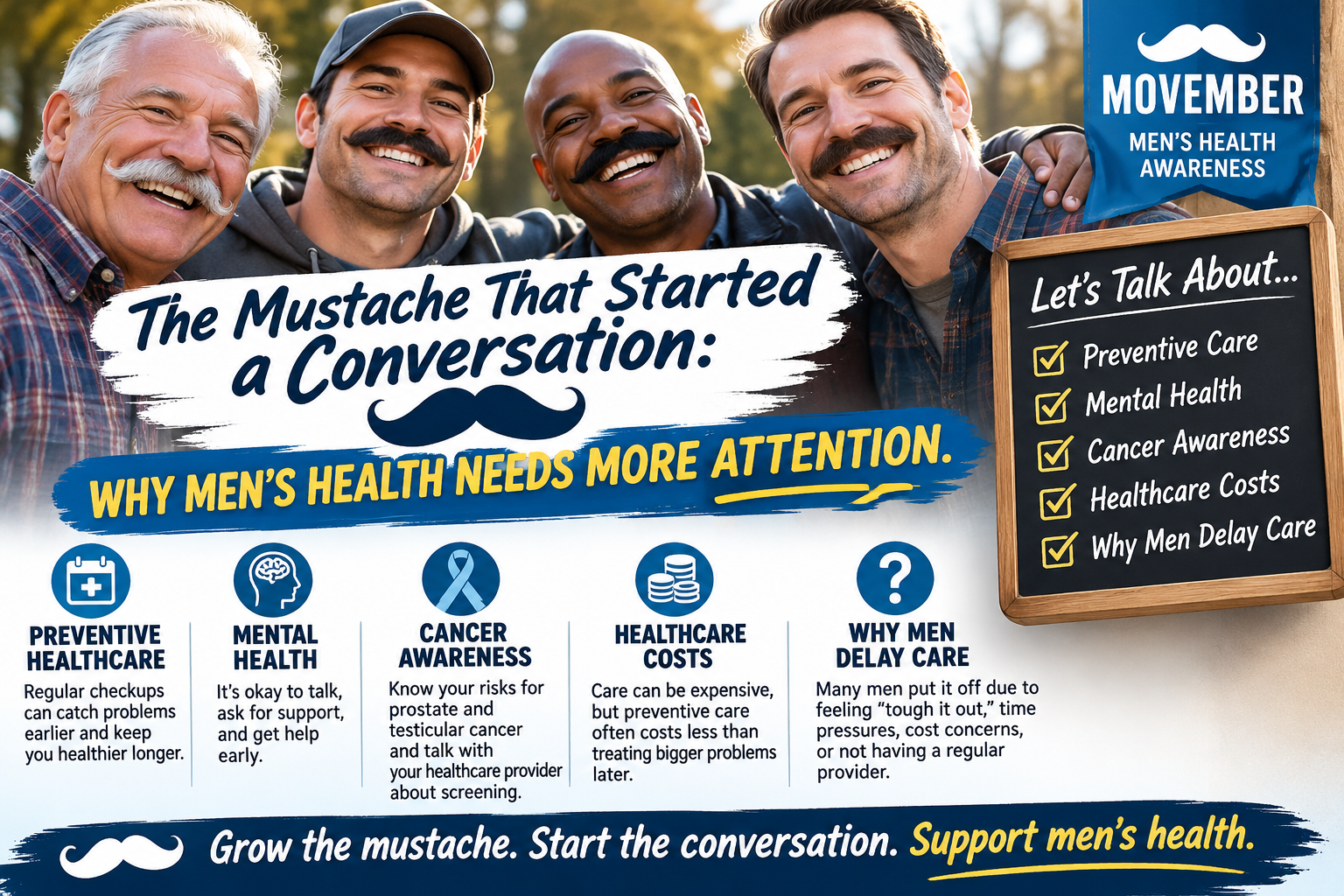
The Mustache That Started a Conversation: Why Men's Health Needs More Attention
Every November, thousands of men grow mustaches that range from distinguished gentleman to "I lost a bet at a truck stop." The joke is part of the point. Movember began with a simple idea: use the mustache as a conversation starter about men's health. More than two decades later, the movement supports work involving mental health and suicide prevention, prostate cancer, and testicular cancer. A little facial hair turned into a global reminder that men's health deserves more attention than the occasional annual physical and a vague promise to "get that checked someday."
One reason the conversation matters is that many men still do not have a regular place for routine healthcare. CDC data from 2024 found that 87.1% of men reported having a usual source of care, compared with 93.3% of women. That gap may not sound enormous until you remember what regular care is designed to do: catch problems earlier, manage chronic conditions, and keep smaller health issues from becoming larger ones. The basic lesson is not complicated. You would not ignore the check-engine light for three years and then act surprised when the transmission leaves the chat. Your body deserves at least the same level of preventive maintenance as your pickup truck.
Mental health is another major part of Movember because some men are still taught, directly or indirectly, that asking for help is a sign of weakness. Research continues to find that restrictive ideas about masculinity can discourage routine checkups and help-seeking. The result can be a dangerous habit of trying to tough it out when the better strategy would be to talk to someone early. Mental health conversations do not need to begin with a dramatic speech. Sometimes they begin with one friend asking another, "You doing okay?" and actually waiting for the answer. That may not look heroic in a movie, but in real life it can matter a great deal.
Cancer awareness belongs in the conversation too. Movember focuses heavily on prostate and testicular cancer, encouraging men to understand their risks, pay attention to changes, and discuss appropriate screening or evaluation with healthcare professionals. Screening decisions are not one-size-fits-all; age, family history, symptoms, and individual risk all matter. The important part is having the conversation before fear or embarrassment turns into avoidance. Men will spend twenty minutes debating whether a strange engine noise requires immediate attention, but somehow a strange symptom can inspire the medical strategy known as "maybe it will just go away." That is not risk management. That is wishful thinking wearing work boots.
Then there is the financial side of staying healthy. Doctor visits, screenings, prescriptions, therapy, insurance deductibles, and time away from work can all cost money. Those costs are real, and they are one reason some people delay care. But delaying care can create its own financial risk if a manageable problem becomes more complicated later. The practical approach is to understand your insurance, use preventive benefits when available, compare healthcare costs when possible, and include recurring medical expenses in the household budget. Preventive healthcare will not eliminate every future bill, just as diversification will not eliminate every market loss. The goal is to reduce avoidable surprises.
That may be the best way to understand Movember. The mustache is funny. The conversation behind it is serious. Men's health improves when people talk openly, get appropriate preventive care, pay attention to mental health, understand cancer risks, and stop treating a doctor's appointment like surrender. Growing a mustache for a month will not solve everything, but it can create an excuse to ask a better question: "How are you really doing?" If the answer starts a conversation, encourages a checkup, or convinces someone to seek help earlier, that ridiculous mustache may turn out to be doing more useful work than expected.